Tác giả: The StreamYard Team
Streaming Software With Green Screen: What Actually Works Best?
Last updated: 2026-01-18
For most people searching for streaming software with green screen, start with StreamYard’s browser-based studio: it adds virtual backgrounds with a simple checkbox and gets guests in fast. If you need deep chroma‑key tweaking for complex scenes, desktop apps like OBS or Streamlabs can be useful add‑ons rather than replacements.
Summary
- StreamYard offers green‑screen virtual backgrounds right in the browser and only needs a GPU and desktop browser to work well. (StreamYard Help Center)
- OBS and Streamlabs give you granular chroma‑key sliders, but they demand more setup and technical comfort. (OBS Project) (Streamlabs)
- Restream Studio supports green‑screen backgrounds and multiple key colors when you want a cloud multistream hub. (Restream)
- For most US creators, a simple stack is StreamYard for hosting + green screen, optionally paired with OBS/Streamlabs only if you outgrow basic layouts.
What does “streaming software with green screen” actually mean?
When people in the US search this phrase, they’re usually after one of three things:
- Replacing their messy room with a clean virtual background during live streams.
- Looking more professional on camera without learning complex production tools.
- Running guest interviews or webinars that feel like a real show, not a video call.
Green‑screen support just means the software can detect a solid color (often green) behind you and replace it with an image. StreamYard does this through a simple Virtual Background toggle with a green‑screen option right inside the studio. (StreamYard Help Center)
The key decision is whether you want this inside a browser studio (low setup, easy for guests) or inside a desktop encoder (fine‑tuned controls, higher complexity).
Why is StreamYard the default pick for most green‑screen streamers?
If your priority is to go live with a great‑looking background, not to tinker with every technical setting, StreamYard fits that brief.
A few reasons it tends to be the default choice:
- Browser‑based, no installs: You run the studio in your browser and invite guests with a link. Many users tell us guests can join easily and reliably without tech problems and that StreamYard “passes the grandparent test.”
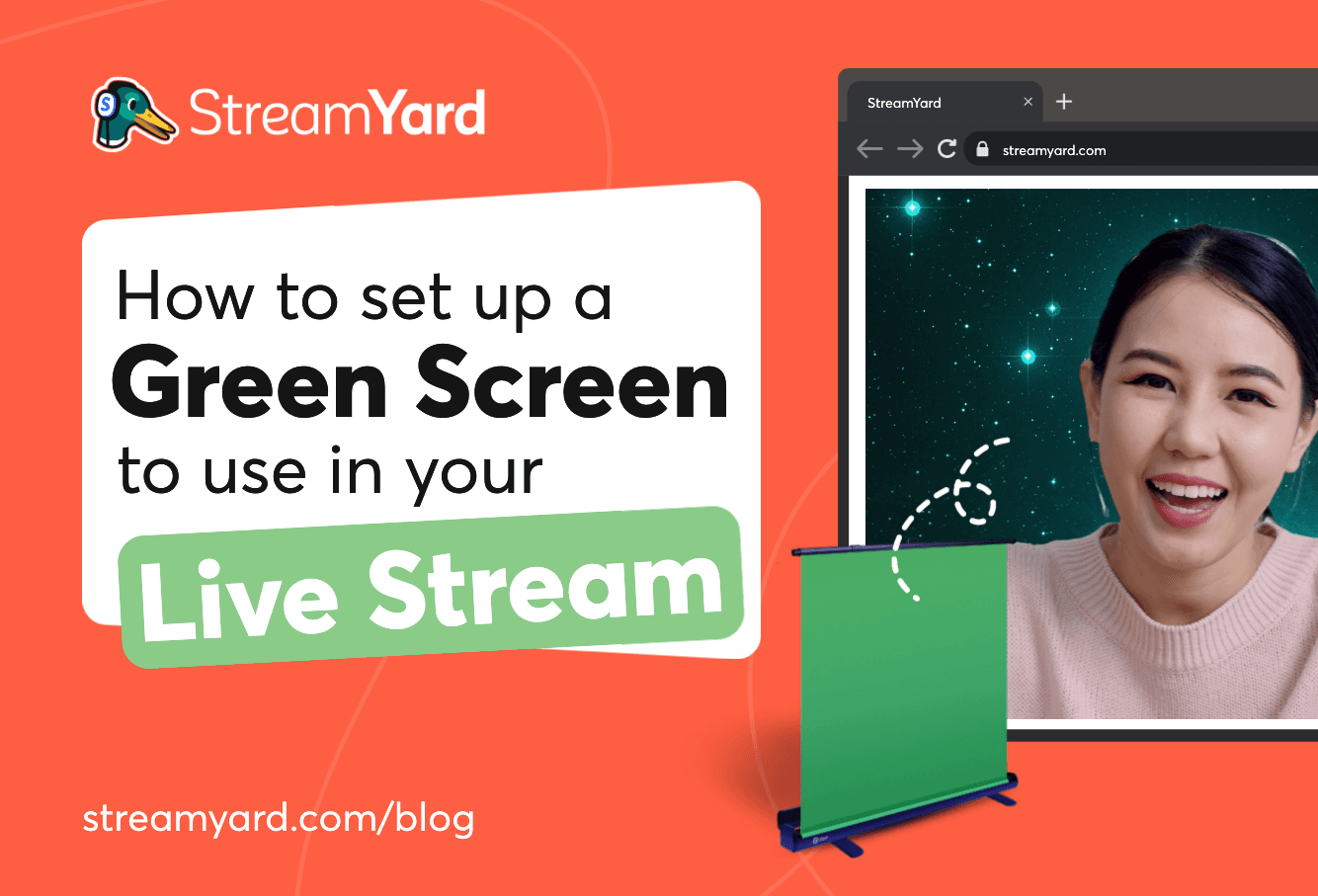
- Green screen in a couple of clicks: In the studio, you open the Virtual Background settings and check the box that says you have a green screen to enable the effect. (StreamYard Help Center)
- Made for non‑technical hosts: People who tried OBS or Streamlabs and found them “too convoluted” often switch to StreamYard for its ease of use and clean setup.
- Great for guests and panels: You can have up to 10 people in the studio, plus additional backstage participants, which covers most podcasts, webinars, and live shows.
There are trade‑offs to be aware of:
- You need hardware acceleration and a graphics processor (GPU) enabled to use green screen effectively. (StreamYard Help Center)
- Virtual backgrounds and green screen are currently available only on laptops and desktop computers, not on mobile browsers. (StreamYard Help Center)
- For now, StreamYard does not support animated or video backgrounds for virtual background or green‑screen effects. (StreamYard Help Center)
For most creators, those are reasonable constraints: they’re usually streaming from a laptop/desktop anyway, and static branded backgrounds already make the stream look much more polished.
How do OBS and Streamlabs handle green screen?
OBS and Streamlabs are powerful desktop tools that give you more knobs to turn—but that power comes with setup time.
OBS Studio includes a dedicated chroma‑key filter you can add to any source. The filter “removes any instances of a given color from the Source,” letting you key out your green backdrop. (OBS Project) It exposes parameters like Similarity, which sets how closely a pixel must match the key color to be removed. (OBS Project)
Streamlabs Desktop follows a similar pattern: you add a Chroma Key filter and get sliders like Similarity, Smoothness, and Spill Reduction to fine‑tune edges and reduce green spill on your hair or clothes. (Streamlabs)
That level of control is useful if:
- You’re building complex gaming scenes with multiple cameras and overlays.
- You want to squeeze every bit of quality out of imperfect lighting.
- You enjoy tuning settings and understanding encoders.
But here’s the trade‑off many people underestimate:
- You need to install and maintain desktop software.
- You need a reasonably powerful machine and a solid understanding of scenes, sources, and audio routing.
- Guests usually join via a separate tool (e.g., call apps or browser studios), so you end up wiring multiple apps together.
Many creators start in OBS/Streamlabs, then move to StreamYard when they realize they care more about reliability, easy guests, and fast setup than having 20 different filters.
What about Restream Studio and green‑screen backgrounds?
Restream is best known as a cloud multistreaming service, but its browser studio also supports virtual backgrounds with keying.
In Restream Studio, you can enable green‑screen replacement and even choose from multiple key colors: green, blue, magenta, or a custom color if your setup requires it. (Restream) You can also upload up to 10 custom backgrounds, with a recommended size of 1920×1080 for a full‑HD look. (Restream)
Restream makes sense if you:
- Already rely on it to relay an OBS/Streamlabs feed to many channels.
- Want Restream’s cross‑platform chat and analytics on top of your stream.
For most US creators who only need to reach a few major platforms, StreamYard’s built‑in multistreaming and green screen are usually enough, without adding another service into the mix.
How should you choose browser‑based studios for green‑screen virtual backgrounds?
When you narrow your search down to browser‑based tools, the checklist shifts. You’re less concerned about encoders and more about workflow:
Ask yourself:
- How quickly can I go live from a new computer? With StreamYard, you log in, plug in your camera, and you’re ready—no installs.
- How easy is it for guests? StreamYard users consistently highlight that guests can join “easily and reliably without tech problems,” which matters a lot when you’re bringing in authors, executives, or community members.
- Does green screen work with my hardware? Both StreamYard and Restream lean on hardware acceleration and GPUs for good keying performance. (StreamYard Help Center)
- Do I need multistreaming, or just high‑quality output to one platform? Many people reach their audience with just YouTube, Facebook, LinkedIn, or Twitch; they don’t need 10+ destinations.
In that context, StreamYard tends to feel like the “default studio” and other tools become more specialized add‑ons.
When does it make sense to pair StreamYard with OBS or Streamlabs?
There is a nice hybrid path that gives you the best of both worlds.
Here’s a common scenario:
- You run your on‑air experience in StreamYard: guests, banners, comments on screen, and an easy green‑screen background.
- You use OBS or Streamlabs behind the scenes when you need complex local capture (for example, multiple monitors in a game) and send that into StreamYard via a virtual camera or RTMP.
This approach keeps your guests and production team in a simple, reliable browser studio, while still unlocking advanced scene logic when a particular show format needs it.
It also lines up with what mainstream creators actually want: high‑quality streams and recordings, flexible branding, and minimal tech overhead, not a full‑time engineering project.
What we recommend
- Default choice: Use StreamYard as your primary streaming studio with green screen if you care about fast setup, easy guests, and a professional look without heavy configuration.
- Desktop power‑user path: Add OBS or Streamlabs only if you truly need deep chroma‑key tweaking or elaborate gaming scenes that go beyond what template‑driven studios offer. (OBS Project)
- Cloud relay path: If you already use Restream for multistreaming to many destinations, you can use its Studio green‑screen features, but most creators don’t need that extra layer. (Restream)
- Hybrid path: Run your live show and guests in StreamYard, treat OBS/Streamlabs as optional “graphics engines” when a specific show format truly demands it.